The NWEA MAP (Measures of Academic Progress) test is a widely used assessment tool designed to measure student achievement and growth in reading, mathematics, and science. It is an adaptive test, meaning the difficulty of the questions adjusts based on the student’s responses, providing a personalized assessment experience. This blog post will delve into the key aspects of the NWEA MAP test, how it works, and how to interpret NWEA MAP test scores.
What is the NWEA MAP Test?
The NWEA MAP test is a computer-based assessment that evaluates students’ academic progress and growth over time. Unlike traditional standardized tests, the MAP test is adaptive, meaning it tailors the difficulty of questions to the student’s performance. If a student answers a question correctly, the next question will be more challenging. Conversely, if a student answers incorrectly, the following question will be easier. This adaptability ensures that the test accurately reflects each student’s unique learning level.
The MAP test is typically administered three times a year—fall, winter, and spring—to track student progress and inform instruction. It is used by schools across the United States and internationally to assess students from kindergarten through 12th grade.
Subjects Covered in the NWEA MAP Test
The NWEA MAP test covers three main subject areas:
- Reading: This section assesses students’ comprehension, vocabulary, and literacy skills. It includes questions on reading passages, word meaning, and literary analysis.
- Mathematics: The math section evaluates students’ understanding of mathematical concepts, problem-solving skills, and computational fluency. Topics range from basic arithmetic to advanced algebra and geometry, depending on the nwea scores by grade level 2025.
- Science: The science section measures students’ knowledge of scientific concepts, reasoning, and inquiry skills. It covers topics such as life science, physical science, and earth and space science.
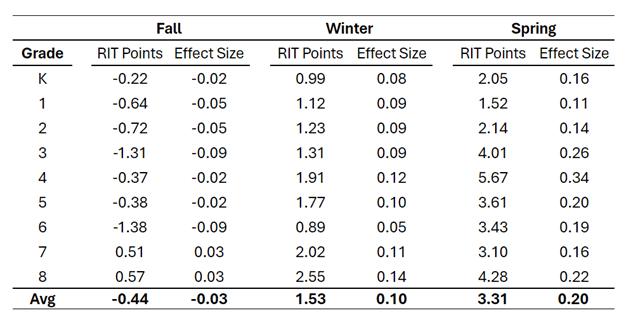
How Are NWEA MAP Test Scores Calculated?
NWEA MAP test scores are reported using the RIT (Rasch Unit) scale, which is a stable, equal-interval scale that measures student achievement and growth. The RIT scale ranges from about 100 to 350, with higher scores indicating higher levels of academic proficiency.
Understanding RIT Scores
RIT scores are unique to the NWEA MAP test and provide a detailed picture of a student’s academic performance. Here’s what you need to know about RIT scores:
- RIT Range: Each subject area has a typical RIT range for each grade level. For example, a 4th-grade student might have a RIT score of 200 in math, which falls within the average range for that grade.
- Growth Over Time: One of the key benefits of the MAP test is its ability to measure growth over time. By comparing RIT scores from different test administrations, educators and parents can see how much a student has improved in a subject area.
- Normative Data: NWEA provides normative data that allows schools to compare a student’s RIT score to the national average for their grade level. This helps identify whether a student is performing above, at, or below grade level.
Percentile Rank
In addition to RIT scores, the NWEA MAP test provides a percentile rank, which indicates how a student’s performance compares to that of their peers nationally. For example, if a student has a percentile rank of 75 in reading, it means they scored higher than 75% of students in the same grade who took the test.
Lexile® Measures for Reading
For the reading section, the NWEA MAP test also provides a Lexile® measure, which is a score that indicates a student’s reading ability. Lexile® measures help educators and parents select appropriate reading materials that match the student’s reading level, promoting literacy development.
How to Interpret NWEA MAP Test Scores
Interpreting NWEA MAP test scores requires understanding both the RIT score and the percentile rank. Here’s how to make sense of the results:
- RIT Score: Look at the student’s RIT score for each subject area. Compare it to the typical RIT range for their grade level to determine if they are performing at, above, or below grade level.
- Percentile Rank: The percentile rank provides context for the RIT score by showing how the student compares to their peers nationally. A high percentile rank indicates strong performance relative to other students.
- Growth Over Time: Review the student’s RIT scores from previous test administrations to assess their academic growth. Consistent growth indicates that the student is making progress, while stagnant or declining scores may signal a need for additional support.
- Lexile® Measure: For reading, use the Lexile® measure to find books and reading materials that align with the student’s reading level. This can help foster a love of reading and improve literacy skills.
How Schools Use NWEA MAP Test Scores
Schools use NWEA MAP test scores for a variety of purposes, including:
- Informing Instruction: Teachers use MAP test results to identify students’ strengths and weaknesses, allowing them to tailor instruction to meet individual needs.
- Tracking Growth: By administering the MAP test multiple times a year, schools can monitor student growth and adjust teaching strategies as needed.
- Identifying Gifted Students: High RIT scores and percentile ranks can help identify students who may benefit from advanced or gifted programs.
- Supporting Struggling Students: Low scores may indicate that a student needs additional support, such as tutoring or intervention programs.
Conclusion
The NWEA MAP test is a valuable tool for measuring student achievement and growth in reading, mathematics, and science. By understanding how the test works and how to interpret NWEA MAP test scores, educators and parents can gain valuable insights into a student’s academic performance and make informed decisions to support their learning journey. Whether you’re a teacher, parent, or student, the MAP test provides a clear and comprehensive picture of academic progress, helping to ensure that every student reaches their full potential.
 Nwea Map Scores 2025